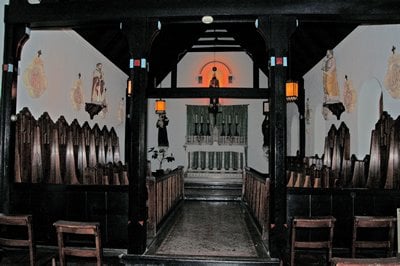
Chapel of St Francis Graymoor USA
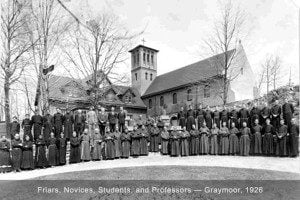
When Hawes decided in 1911 to leave The Bahamas where he was working as an Anglican Minister with the idea of converting to Catholicism, he travelled first to New York and then by train 80kms north to Graymoor, the home of a Catholic, once Anglican, Franciscan organization, The Society of the Atonement which had been founded to pray for Church unity. Hawes had for many years corresponded with one of the founders, Fr Paul James Wattson SA, who was originally an Anglican. Fr Paul was also the founder of the Society’s publication, The Lamp. It was after reading an article in The Lamp entitled ‘the Necessity for Certitude’ that Hawes finally made the decision to become a Catholic and hence, had travelled to Graymoor to be received into the Church.
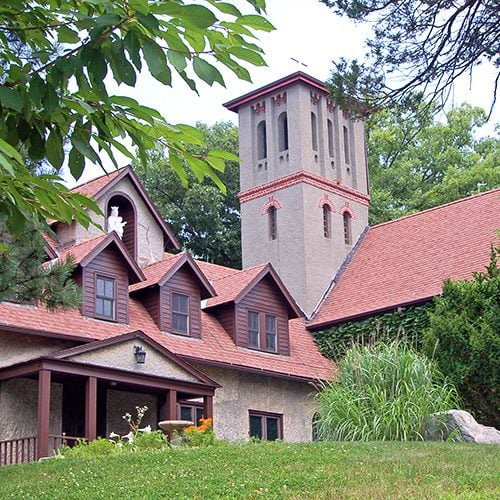
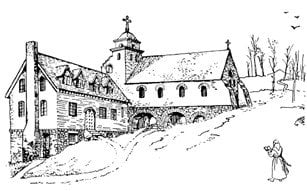
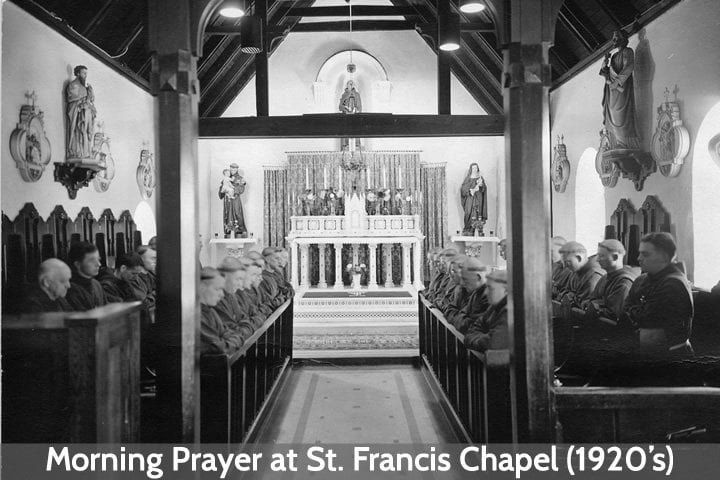
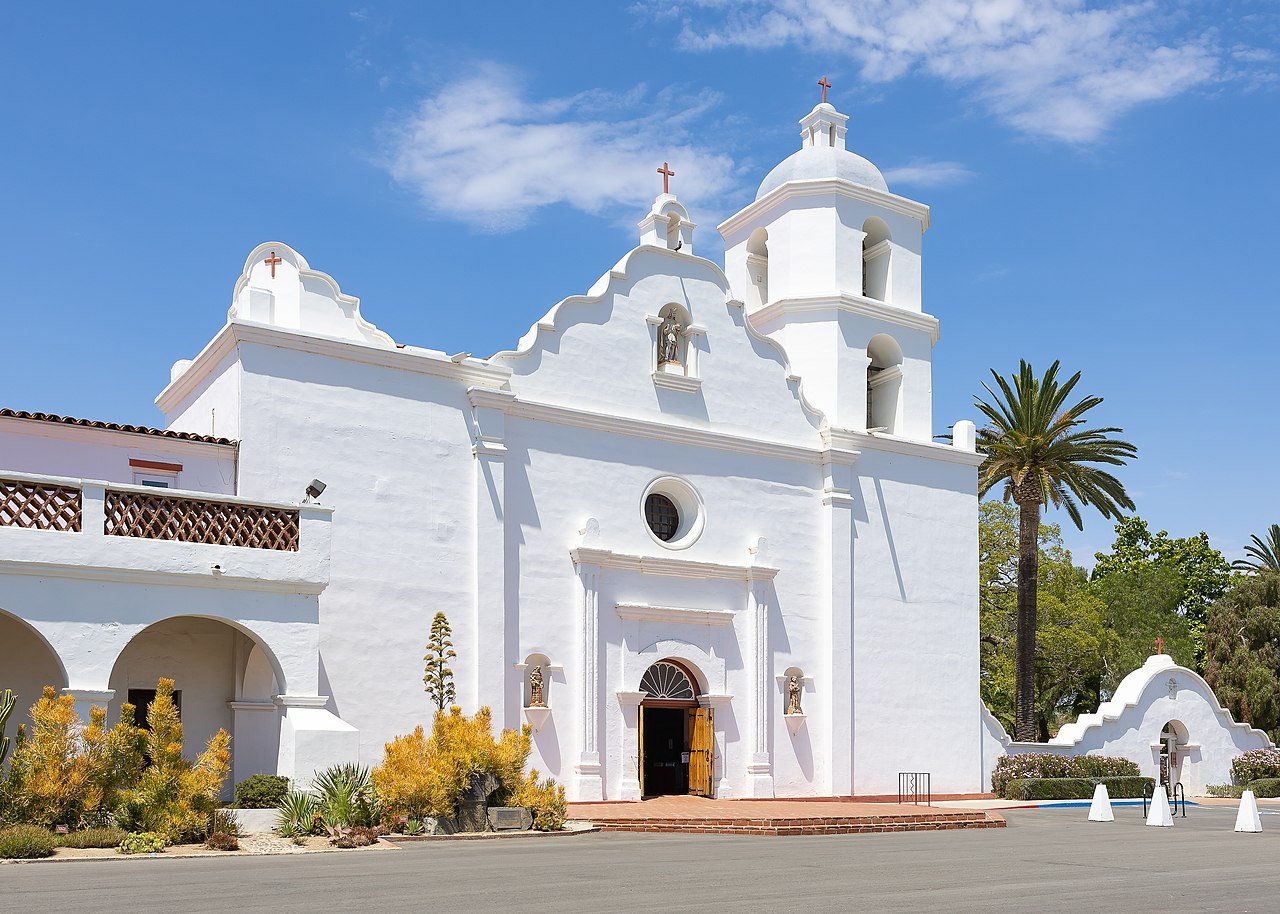
Hawes spent several months at Graymoor preparing for this occasion and during that time, at the request of Fr Paul, he designed a stone chapel - Where the Holy Sacrifice of the Mass and the Divine Office should be daily said or sung to the glory of God. This chapel. along with the Church of St Paul on Long Island in The Bahamas, was one of the first of Hawes' buildings to incorporate the Spanish Mission Style of architecture which was found mostly in California.
Although the design of the chapel's tower was later changed by another architect to incorporate a belfry, the original drawing by Hawes showed a buttress and tower very like that of San Luis Rey de Francia in California.
The cornerstone for the chapel was laid on St Patrick's day (17th March) 1911, 2 days before Hawes was received into the Catholic church. In 2012, Fr Paul's 'Little Miracle in the Woods' as it became known, celebrated 100 years and like many of Hawes' buildings, has undergone conservation work.
Visiting the Building
Nestled in the hills of the Hudson River in Putnam County, 50 miles north of New York City, Graymoor’s picturesque grounds, shrines and chapels are open dawn to dusk, year round, for the public and people of all faiths to enjoy. From the summit of Mount Atonement, marvel at the sweeping vista and the beauty of a replica of Michelangelo’s Pieta. A few steps away find the tranquility of the St. Francis Chapel, with its altar that once marked the spot where St. Francis of Assisi received his holy stigmata in 1224.