
-

- Crypt

-

- Crypt

-

- Crypt

-

- Crypt

-

- Crypt


-
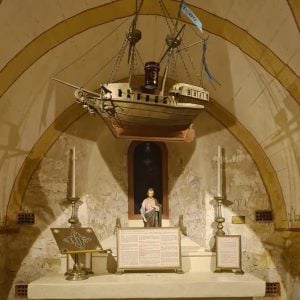
- St Joseph’s Chapel in the Crypt of St Francis Xavier Cathedral

-
- Crypt

-
- Crypt

-
- Crypt
-
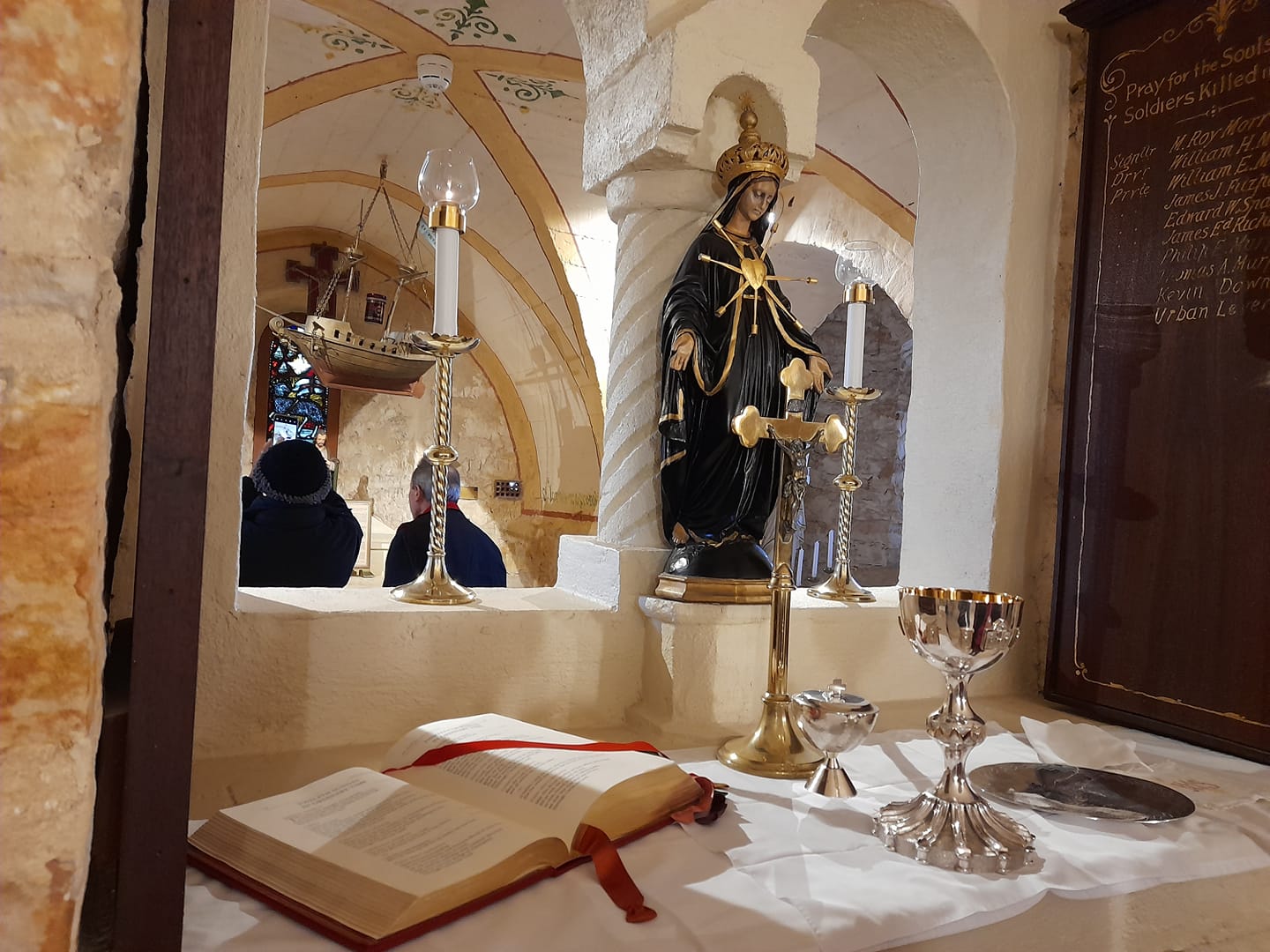
- Our Lady of Sorrows altar in the crypt
The first stage of the crypt was built as part of the Stage 1 works in 1918.
It was completed in 1926.
The early Christian churches had crypts excavated below the High Altar where they kept for veneration any precious relics that were brought back from Rome by the missionaries. This tradition was carried on in the cathedrals and churches of the Middle Ages.
The crypt in St Francis Xavier Cathedral contains
a) A relic of the Crib – a piece of the manger in which the Infant Jesus was placed. The main boards are kept in Rome.
(b) Reliquaries which had contained relics of Saints and Martyrs - similar to those in the Tombs of the Martyrs in Rome - but are now empty.
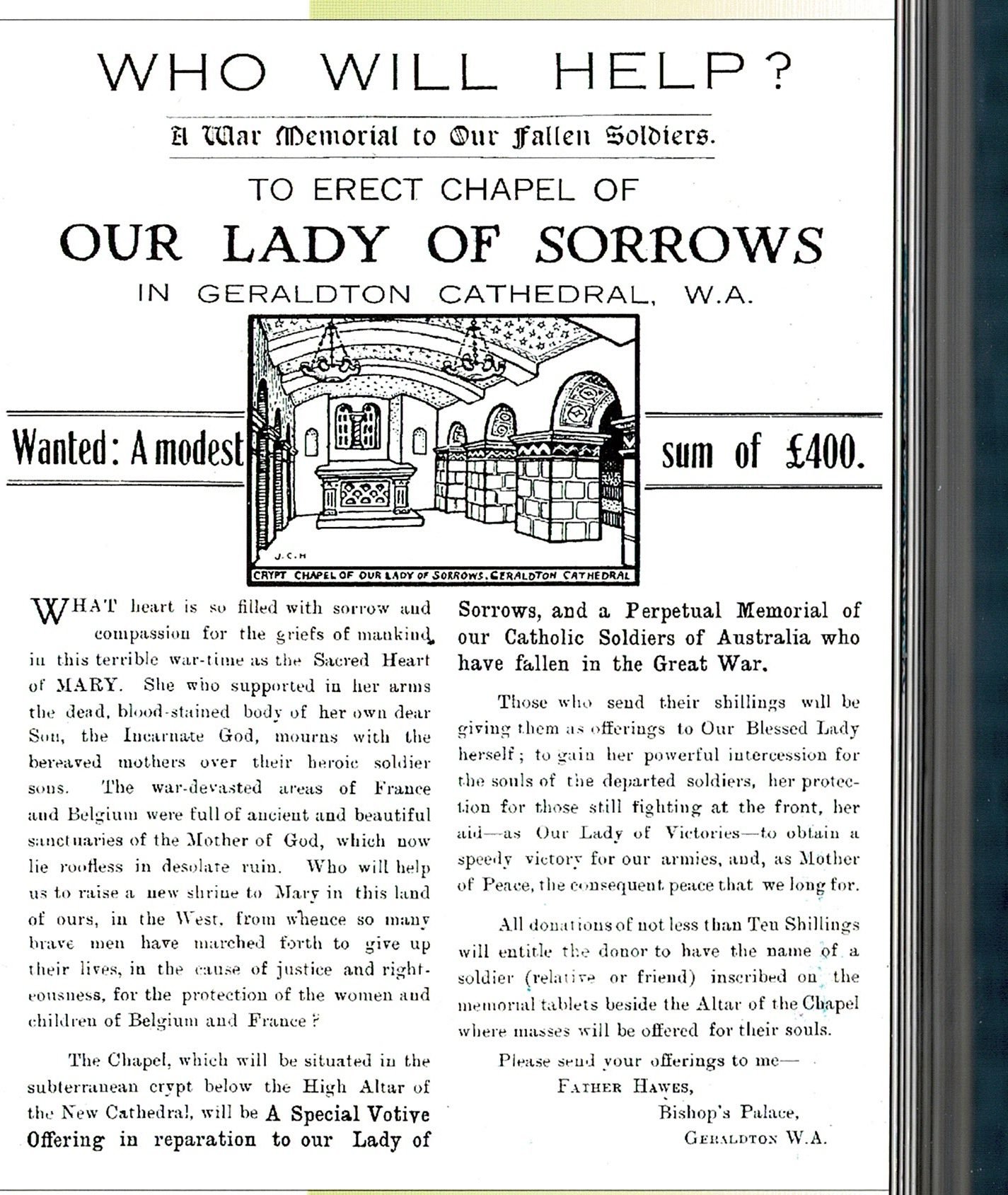
The First World War had taken a toll on the Geraldton Community with the loss of many servicemen, so in a plea for funds to build the crypt in St Francis Xavier Cathedral, which was estimated to cost £400, John Hawes wrote the following:-
The Chapel, which will be situated in the subterranean crypt below the High Altar of the New Cathedral, will be A Special Votive Offering in reparation to our Lady of Sorrows, and Perpetual Memorial of our Catholic Soldiers of Australia who have fallen in the Great War.
Donors of Ten Shillings or more were entitled to have the name of a soldier inscribed on the memorial tablets beside the Altar of the Chapel. There are Four Honour Boards in the chapel with the names of 57 fallen soldiers whose family members paid the ten shillings to have their names inscribed.
Click here for a list of the names and information about the soldiers.
The statue of Our Lady of Sorrows bears a raised heart pierced by 7 arrows representing the 7 major sorrowful events in her life. In some places she is called Mary of the Seven Swords.
The chapel of Michael of the Archangel contains a reliquary which was originally under the altar of Our Lady of Sorrows, however the relics have been relocated to an unknown place - possibly the Bishops House. A new stained glass window was donated by the Cathedral Tour Guides.
Behind the main altar is the Chapel of St Joseph. The window represents Christ as the triumphant Lamb mentioned in the Apocalypse. “Worthy is the Lamb who was slain to receive power and wealth and wisdom and might and honour and glory and blessing” Rev. 5:12
The lamp hanging here was commissioned by Hawes as a votive offering of thanks to Our Lady Star of the Sea for his safe arrival in Australia (by passenger liner in 1915).
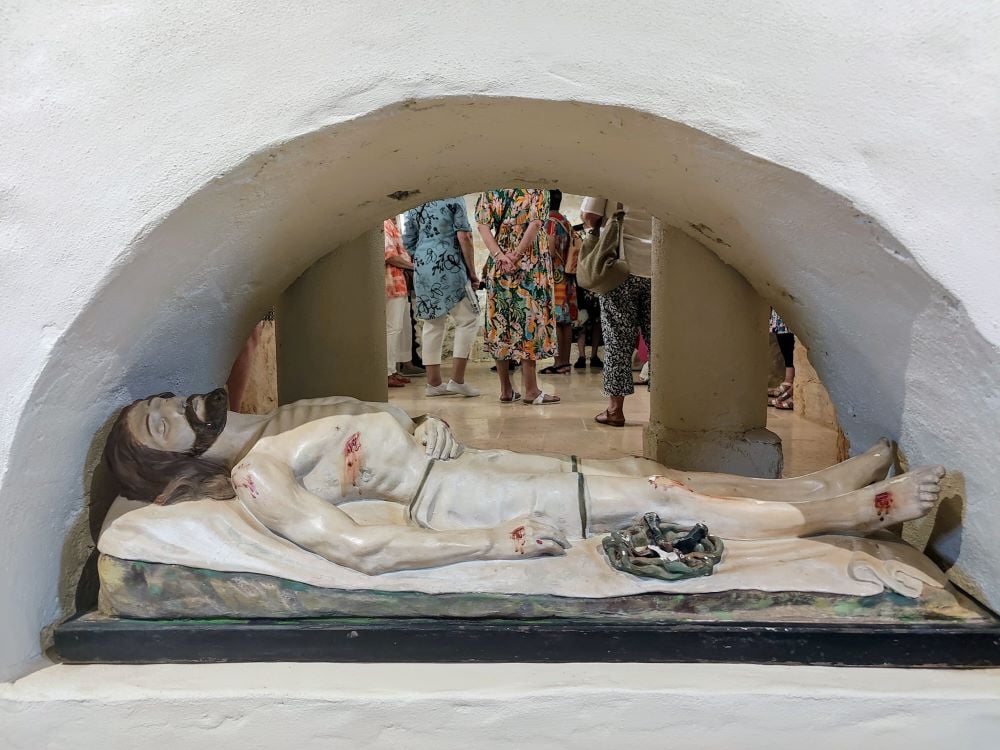
The figure off the dead Christ was originally under the High altar in the Sanctuary prior to Vatican II.
The ceiling in the crypt looks like painted wood but is in fact cement and the work is called 'Off Form Concreting'. To make this curved concrete ceiling would have been difficult and this work is rarely seen.
For more information on the Crypt see Newspaper Clippings 2.